
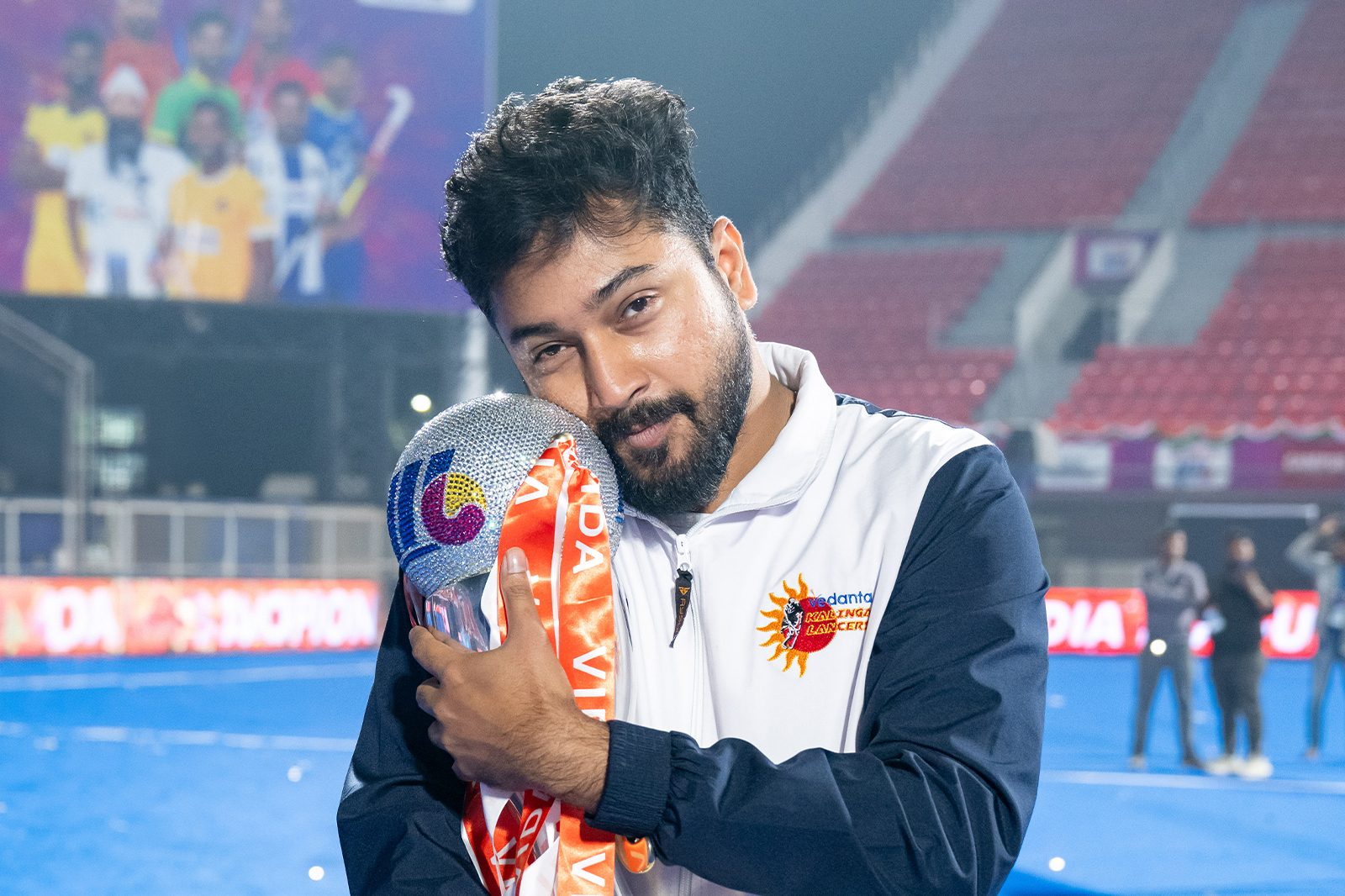
For many, the path to professional sports starts with a ball and a dream. For Abhijeet Hazary, it started on the basketball courts of Odisha. He climbed the ranks, representing his state at the Nationals and playing at the university level. But like many athletes reaching the crossroads of adulthood, Hazary faced a sobering realization: while his passion for sports was infinite, his ceiling as a professional player was not.
“I felt at a point in time that it wouldn’t help me build my career as a player,” Hazary recalls. “But sports was always my forte. I wasn’t much into academics; I wanted to stay in this ecosystem.”
That desire to remain in the game led him to sports management and, eventually, to a niche corner of the industry that most fans never see: video analysis. Today, Hazary is the technical backbone of the Vedanta Kalinga Lancers, the man responsible for dissecting every flick, pass, and defensive lapse that determined their recent Hockey India League (HIL) title win.
From Basketball to the Data Booth
Hazary’s transition from the court to the computer wasn’t immediate. He cut his teeth at a US-based analytical firm, breaking down everything from American football to volleyball. It was here he discovered a natural aptitude for the “eye in the sky” perspective.
“I started liking this analytical role—analysing games and helping coaches and players in ways I wasn’t even aware of when I was playing,” he says. “It’s about evaluating key areas of improvement. I don’t call them weaknesses; they are areas to get better.”
In a country where sports careers are often seen as “athlete or nothing,” Hazary is a vocal advocate for the technical side. While the field is established in the UK and US, he notes that India is just now waking up to its importance. “There are multiple courses now, six-month programs and internships. It’s a niche domain, but the awareness is finally there.”
The Match Day Grind
While the fans see 60 minutes of high-octane hockey, Hazary’s work begins days earlier. His “Match Day -1” is a marathon of data harvesting. Using cutting-edge software, he clips opponent footage, focusing on specific parameters requested by the coaching staff—tactics, PC (penalty corner) patterns, and individual player habits.
On the day of the game, Hazary is less of a spectator and more of a mission controller.
“I have a lot of gear. I have to set up cameras, remotes, and Wi-Fi hubs to connect my laptop with the coaches’ dugout so they can see real-time footage,” Hazary explains. “During the match, I’m doing live coding. I am communicating through headphones, giving feedback to coaches, and even showing players clips during water breaks or substitutions.”
The Lancers’ Tactical Evolution
The difference between the Lancers’ disappointing sixth-place finish in the previous season and their recent trophy-winning run came down to one word: Tactics.
Hazary points to the arrival of a new coaching philosophy led by the likes of Pascal Kina and Jean Stacy as the catalyst. “This season was very tactical and analytical. We did our homework before the auction. Last season, our setback was conceding too many goals. This year, we were the team with the fewest goals conceded.”
The numbers back him up. Through rigorous video sessions, the team perfected their “PC Defense,” with Hazary’s data helping players like Hendrikx and Cooper Burns anticipate opponent movements with split-second precision.
A Full-Circle Victory
For Hazary, the title win in Bhubaneswar was more than just a professional achievement; it was a homecoming. Having worked with the Odisha state hockey ecosystem for years, he watched many of the Lancers’ local stars—like Roshan Kujur and Rohit Kullu—grow from academy prospects into champions.
“Working with these guys for years made my job easy,” Hazary says. “There was a comfort level. Without them even asking, I knew what data they needed to see. It was easy communication.”
As the “hub of hockey” celebrated the Lancers’ victory, Hazary found the atmosphere in the stands at Rourkela and Bhubaneswar surreal, a level of passion he says rivaled the country’s obsession with cricket.
“Winning the HIL trophy was a dream come true because we have been manifesting it since last year,” he says. “To see that support from the home crowd. It gave us the motivation to perform. I am just looking forward to winning more titles now.”